It was supposed to be just a normal Tuesday morning.
Emma had barely poured her first cup of coffee when the day started to fall apart. Her eight-year-old couldn’t find his school shoes. Her daughter suddenly remembered she needed chart paper for a science project at the last minute. A notification popped up reminding Emma of a dentist appointment she had forgotten to mention to her husband. Just as everyone hurried toward the front door, another email arrived from the school announcing a change in tomorrow’s pickup schedule due to a staff meeting.
By the time the kids left, the kitchen looked like a war zone. But what truly wore Emma out wasn’t the mess , it was the endless mental to-do list running through her head.
Buy chart paper.
Reply to the teacher.
Reschedule tomorrow’s meeting.
Book Grandma’s health check-up.
Order groceries.
Remember that Liam’s football practice starts earlier this week.
None of these tasks were written down or considered chores, yet together they drained more energy than washing dishes or folding laundry ever could.
As she sat down to start her workday, Emma realized something unexpected: she hadn’t actually gotten much done yet, but she already felt mentally exhausted.
That feeling wasn’t new. It had quietly become a regular part of her daily life.
The Job Nobody Applies For
Managing a household has transformed significantly over the past ten years.
Nowadays, families are not just handling meals, laundry, and school runs. They are juggling hybrid work schedules, extracurricular activities, online school platforms, grocery deliveries, medical appointments, family finances, birthdays, vacations, and a constant flow of emails, messages, and notifications. Each day brings new information that must be remembered, understood, and acted upon.
The difficulty is that much of this effort goes unnoticed.
People see when someone prepares dinner or mows the lawn because those tasks have clear start and finish points. What often goes unrecognized is the mental effort beforehand. Someone realizes the pantry is nearly empty before anyone else does. Someone checks the family calendar before committing to dinner plans. Someone spots a conflict between soccer practice and a doctor’s appointment and quietly rearranges the afternoon without mentioning it.
This ongoing mental effort is known as the mental load. Read the complete guide to understanding the mental load
The mental load isn’t about doing more physical tasks. It involves bearing the responsibility of remembering, anticipating, organizing, and coordinating everything that keeps the family running smoothly. It resides in one person’s mind and often goes unnoticed until that person feels overwhelmed.
Interestingly, the person carrying the mental load isn’t always the one doing the most chores. They are simply the one ensuring everyone else knows what needs to happen next.This unseen responsibility is what causes many parents to feel mentally drained before the day has even fully started.
We Purchased More Apps. So Why Does Life Seem More Complicated?
Technology was meant to simplify family life.
Yet, many homes have turned into digital mosaics held together by routine.
Appointments are kept in a calendar app. Grocery lists are saved elsewhere. School updates come via email, family chats happen on WhatsApp, reminders are stored on individual phones, and important documents get lost in folders no one recalls creating.
Each app does its job adequately. The issue is that none of them sees the whole picture.
Picture getting a school newsletter about a field trip. The email includes a deadline for permission slips, a payment date, a reminder to pack lunch, and a call for volunteers. The calendar notes the trip but doesn’t know about the permission slips. The shopping app isn’t aware that snacks need to be bought. The family chat turns into another place where reminders get buried under photos and weekend talk.
None of the technology is faulty.
The problem lies in the system.
Rather than easing mental load, these disconnected tools quietly add to it because someone still has to piece everything together.
Families haven’t become less organized.
Their lives have simply outpaced the tools they rely on.
Introducing Famant: Created for Families, Beyond Just Managing Tasks
Here’s where Famant comes into play.
Famant wasn’t developed because families needed another productivity tool. There are already numerous calendars, reminder apps, shopping lists, and task managers out there. The real issue wasn’t the shortage of tools, it was the lack of integration among them.
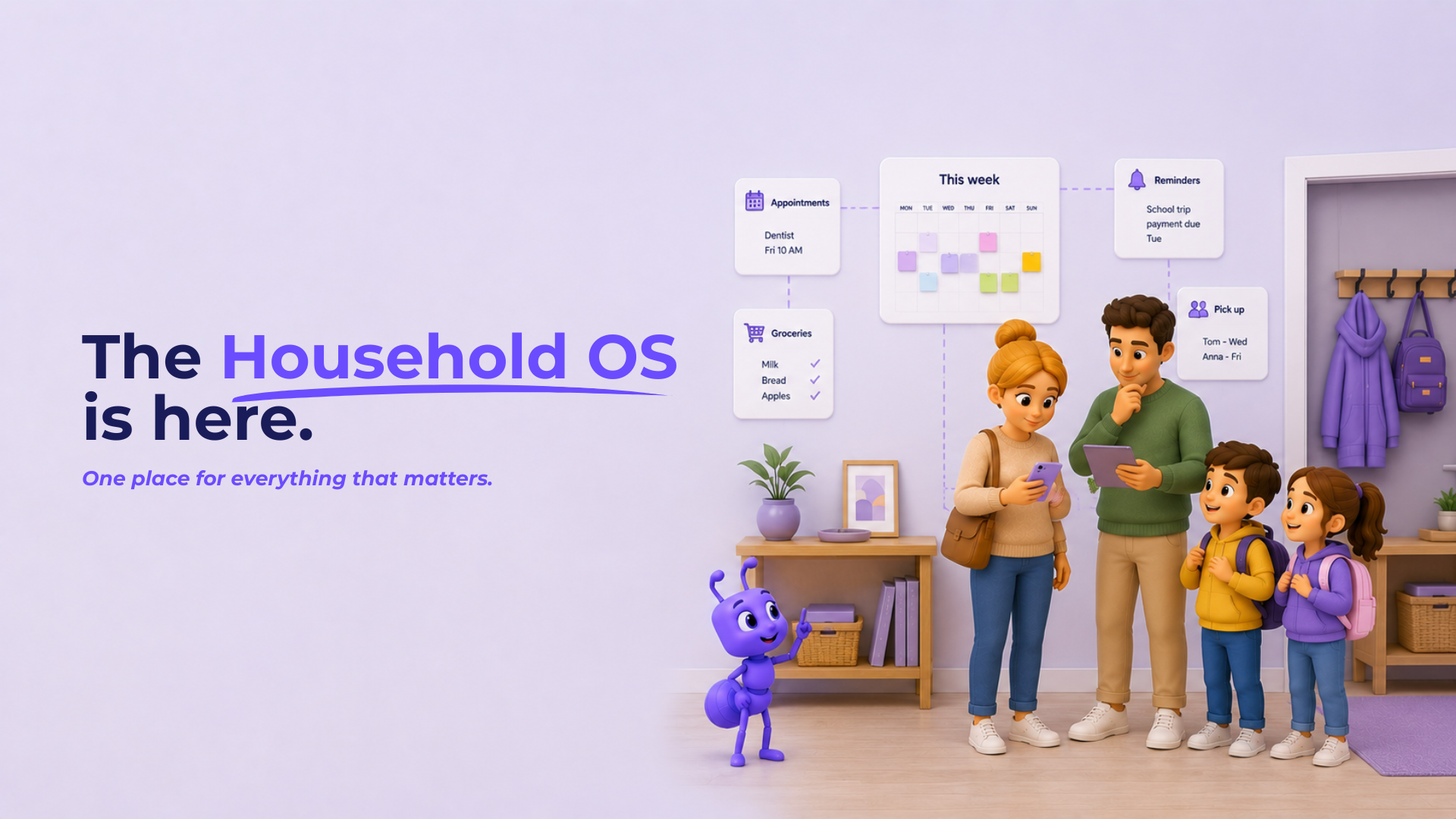
Famant takes a unique approach to managing the home. Rather than viewing each duty as a separate item to check off, it sees the household as a dynamic system where information, communication, planning, and responsibilities seamlessly interact. Whether it’s a school notice, a grocery alert, or a change in weekend plans, Famant aims to minimize the mental effort families spend just to stay organized.
The Three Foundations of a Household Operating System
1. A Single Hub for Everything
The first step to reducing disorder is to eliminate fragmentation. Rather than switching between multiple apps, Famant provides one reliable source of information for the whole family.
For example, when a school newsletter arrives, usually someone must:
● Read the email
● Identify key dates
● Add events to the calendar
● Inform their partner
● Set reminders
● Remember needed supplies
With a Household OS, information is entered once and automatically shared with everyone.
No repetition.
No missed messages.
No constant forwarding.
2. AI That Truly Lightens the Load
While AI often promises increased productivity, Famant emphasizes something more important:
Lowering mental effort.
Its AI assistant, Liv, supports families by comprehending information rather than just storing it.
For instance, Liv can:
● Read long school newsletters
● Highlight important deadlines
● Extract event dates
● Automatically add appointments
● Generate preparation tasks
● Organize duties
Instead of sifting through pages of announcements, parents receive only the essential actions.
This is automation that genuinely helps.
3. Revealing the Hidden Work
A major challenge in family life is that not all tasks look the same.
Laundry might take thirty minutes. But planning meals for a week involves decision-making, budgeting, checking supplies, grocery shopping, and scheduling.
Traditional to-do lists treat these tasks equally; Famant does not. Using its CarePoints system, the platform estimates both the time needed and the mental effort involved.
The basic formula is:
CarePoints = Base Execution Time × Friction Multiplier
Famant’s CarePoints framework offers a unique perspective. It recognizes that household work involves more than just time spent. Activities like planning, coordinating, remembering, and anticipating also demand effort, even though they often go unnoticed. By highlighting these unseen contributions, CarePoints enable families to gain a clearer understanding of how tasks are truly divided not to assign blame, but to promote more balanced discussions and fairer collaboration.
A Home Should Truly Feel Like Home
Technology has changed how we work, communicate, shop, and travel. Yet, managing a household still largely relies on one person’s memory. We embrace digital innovation everywhere except in the place where most of our lives actually take place.
Maybe that’s why many families feel like they’re always trying to catch up instead of moving ahead.
The future of managing a home isn’t about adding another app or making another to-do list. It’s about creating systems that quietly eliminate unnecessary stress, so families can focus less on logistics and more on each other.
Because at the end of the day, no one aspires to be the perfect household manager.
They want to sit down for dinner without worrying about what they forgot.
They want to enjoy a Saturday morning without mentally scheduling the entire week ahead.
They want to be fully present with their loved ones.
Perhaps the smartest homes of the future won’t be those packed with the most technology. Instead, they’ll be the ones where technology works so seamlessly in the background that families barely notice it.
And maybe that’s the true promise of a Household Operating System not to help us manage our homes better, but to help us spend less time managing them and more time simply living in them.